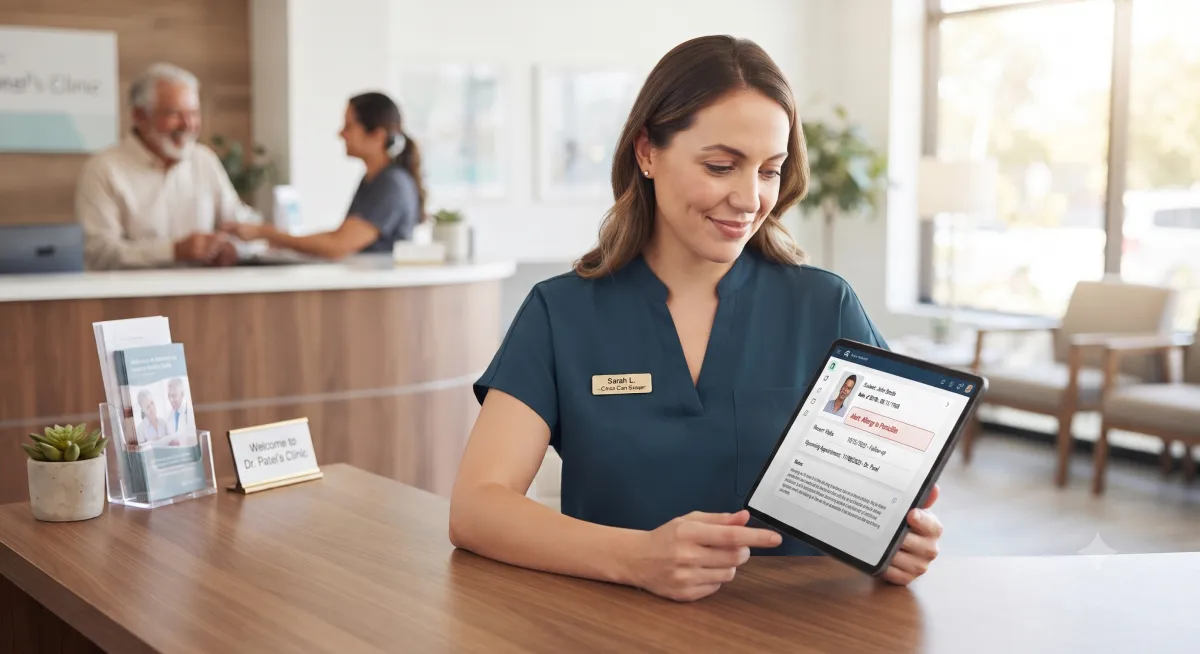
How Local Med Spas and Dental Practices Can Automate Scheduling Without Losing the Personal Touch
Healthcare, AI Automation, Patient Experience
As a healthcare professional, I see a clear pattern in high-touch environments such as medical spas and dental practices: patients value warmth and responsiveness in equal measure. In 2026, the clinics that thrive are not the ones avoiding automation, but the ones using AI to quietly remove friction while keeping human connection front and center.
⚠️ Clinical Disclaimer: AI scheduling tools should support, not replace, licensed clinical judgment. They must never be used to diagnose, triage emergencies, or offer individualized medical advice. Patients in pain, with acute symptoms, or in doubt about urgency should be directed to call your office, an emergency line, or local emergency services immediately.
From “Protecting the Personal Touch” to Removing Friction
In aesthetics and dentistry, our work is inherently intimate. That is why many clinicians hesitate to introduce AI assistants for scheduling or patient inquiries. The concern is understandable: no one wants their practice to feel cold, scripted, or transactional. Yet, current data on AI in healthcare customer service suggests a different risk profile. When phones roll to voicemail, messages go unanswered, or patients wait days for a response, they often seek care elsewhere—regardless of how kind your team is in person.
Industry-wide, AI-enabled service channels now handle the majority of routine customer interactions, with organizations reporting 20–30% gains in satisfaction and efficiency when implemented thoughtfully. At the same time, trust remains fragile; many patients are wary of fully automated experiences without clear human oversight. For local med spas and dental practices, the opportunity lies in a hybrid model: AI removes friction, humans deliver empathy.
The Anatomy of a High-Friction Front Desk
A typical clinic front desk is juggling check-ins, payments, sterilization flow, phone calls, and last-minute schedule changes. This is a predictable recipe for unintentional patient frustration. From a clinical operations perspective, I see three recurring “leaks” in the experience:
The Interrupted Consultation: When staff break eye contact to answer a ringing phone, the patient in front of them feels less important, even if the intent is to be helpful to the caller.
The Rush-Job Greeting: A hurried, distracted welcome at check-in undermines the calm, confidence-building environment that both aesthetic and dental patients expect, especially before procedures that trigger anxiety.
The Extended Hold Time: Long holds while staff navigate complex schedules or intake forms give prospective clients ample time to open a competitor’s website and book elsewhere.
When these moments accumulate, they erode trust more than a well-designed AI assistant ever will. In essence, friction—not automation—is what makes a practice feel impersonal.
Designing “Warm” Conversational AI for Healthcare Settings
At Northshore AI Solutions, the goal is not to deploy a generic chatbot, but to create a Conversational AI Assistant that behaves like a well-trained, compliant care coordinator. In line with 2026 trends toward “agentic AI” that can take action, not just give information, these assistants are designed with specific conversational parameters to preserve warmth and professionalism.
Empathy Pauses and Natural Pacing: Instead of instant, search-engine-style text dumps, the assistant responds with human-like pacing, acknowledging concerns before presenting options. For example, “I’m sorry you’re dealing with that sensitivity; let me check our earliest opening for you.”
Tone and Vocabulary Alignment: A specialty dental practice may prefer clear, clinical language and structured explanations, while a luxury med spa may emphasize serenity, self-care, and discretion. The AI is trained on your specific brand voice so every interaction feels like “your” practice, not a software vendor.
HIPAA-Conscious Guardrails: The assistant can answer pre-care, post-care, and policy questions; surface educational content; and book or modify appointments, while strictly avoiding diagnosis, treatment recommendations, or discussion of protected health information beyond what is necessary for scheduling. Robust access controls, encryption, and audit trails support regulatory compliance, mirroring broader healthcare AI governance trends.
A typical interaction might look like this:
[Inbound Inquiry, 9:12 PM: “Do you have openings for Botox this Friday?”]

AI Assistant: “I’d be happy to help you with that!
Let me check our master schedule for Friday afternoon…”

[Secure, real-time sync with Jane, Zenoti, or your dental CRM]

AI Assistant: “We have a 2:00 p.m. and a 4:30 p.m. with Sarah.
Which time works best for you?”
Behind the scenes, the system is performing the same work a receptionist would—just faster, without interrupting in-clinic care.
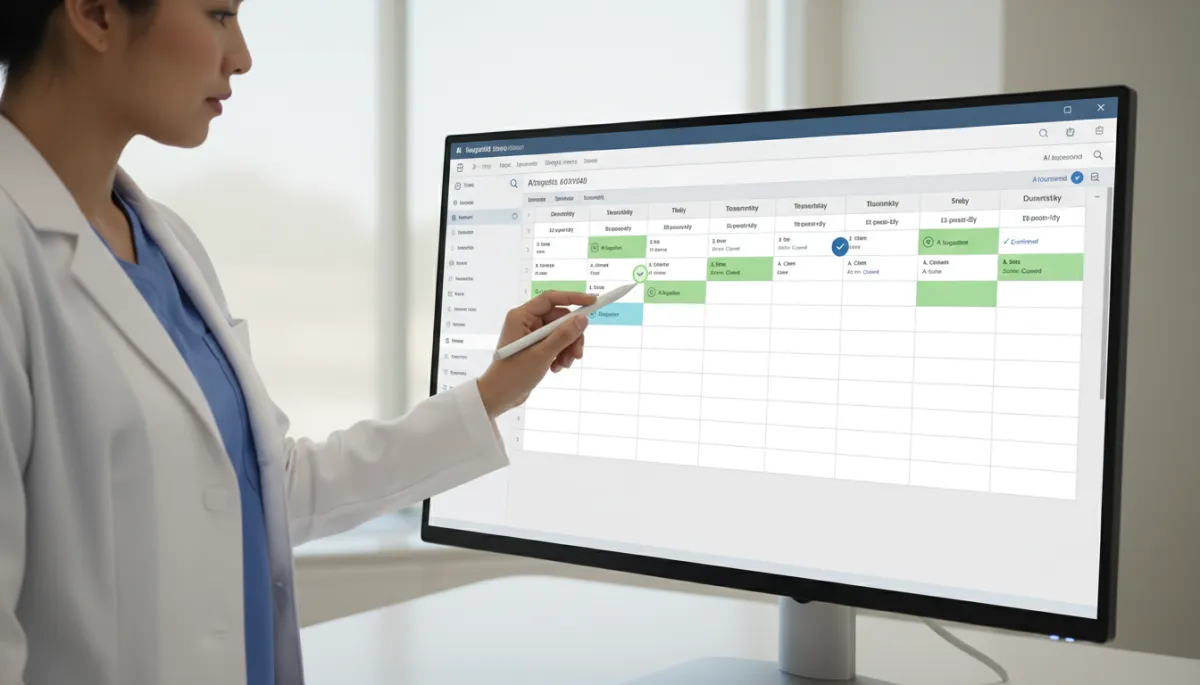
Real-time AI scheduling keeps chairs filled while staff stay focused on patients.
Three Ways Automated Scheduling Enhances the Personal Touch
1. Freeing Your Team for In-Person Hospitality
When AI handles routine logistics—checking availability, explaining cancellation policies, sending reminders, or offering alternative time slots—your front-desk team can stay fully present with the person in front of them. This aligns with broader healthcare AI trends, where automation is used to offload administrative tasks so clinicians can spend more time face-to-face with patients.
In practical terms, this means your receptionist can offer a calm greeting, answer questions about a procedure, and walk a nervous patient through post-op instructions—without glancing anxiously at a ringing phone. Hospitality improves because attention is no longer divided.
2. Providing Instant, 24/7 Validation for Patient Decisions
Many patients decide to act outside business hours—after a day of dental discomfort, or when they finally have a quiet moment to research injectables. AI scheduling that integrates directly with platforms like Jane and Zenoti allows them to see live availability, join waitlists, or secure a specific provider and time in seconds. Jane’s mobile app waitlist and secure messaging features, and Zenoti’s AI Receptionist that converts missed calls into bookings, exemplify this shift toward always-on, patient-driven access.
That immediate confirmation is not just convenient; it is emotionally validating. It reassures patients that their concern is legitimate and that your practice is ready to care for them, even when the physical office is closed.
3. Delivering Hyper-Accurate, Consistent Intake and Follow-Up
In a busy clinic, it is easy to mishear a phone number, misspell an email, or forget to send a confirmation message. AI scheduling systems capture data directly from the patient, validate formats, and sync to your electronic records in real time. They can automatically send tailored intake forms, pre-visit instructions, and follow-up reminders through email, SMS, or app notifications—capabilities now standard in leading platforms (healthcareitnews.com, medspamagazine.com).
This consistency does more than reduce no-shows and administrative rework. It signals reliability. Patients quickly learn that when your practice says, “You will receive your forms and directions shortly,” those materials arrive promptly and accurately, every time.
Elevating Patient Experience Without Expanding Payroll
Thoughtful automation does not replace the humanity of your clinic; it protects it. By delegating mechanical scheduling tasks to AI, your clinical and aesthetic teams can focus on the work only humans can do: building rapport, performing procedures safely, and guiding patients through vulnerable moments with empathy and expertise. This mirrors the broader healthcare movement toward hybrid human–AI models, where technology handles repetitive workflows and people handle nuance, ethics, and emotion.
At Northshore AI Solutions, we specialize in “done-for-you,” hyper-personalized conversational pipelines that integrate with your existing tools, keep your chairs filled, and maintain the elite reputation you have worked hard to build. Each implementation is tailored to your regulatory requirements, brand voice, and patient demographics, so the assistant feels like a natural extension of your team—not a bolt-on widget.
💡 Implementation Tip: Start with a clearly defined, low-risk use case—such as after-hours appointment requests or waitlist management—measure its impact on response times and patient satisfaction, then expand to more complex workflows once your team is comfortable with the technology and governance framework.
Ready to see how a conversational assistant can blend seamlessly into your practice? Explore how an AI scheduling partner can support your med spa or dental office without sacrificing the human touch your patients value most.
